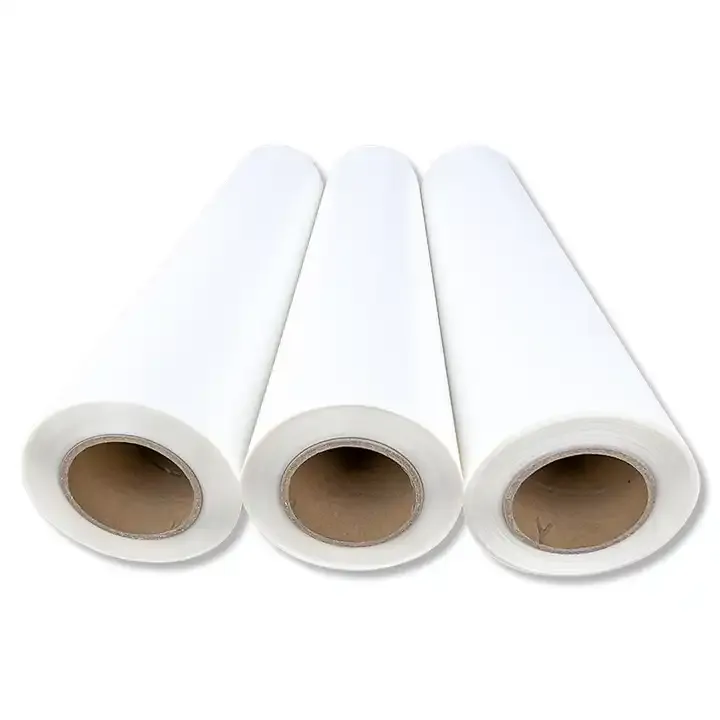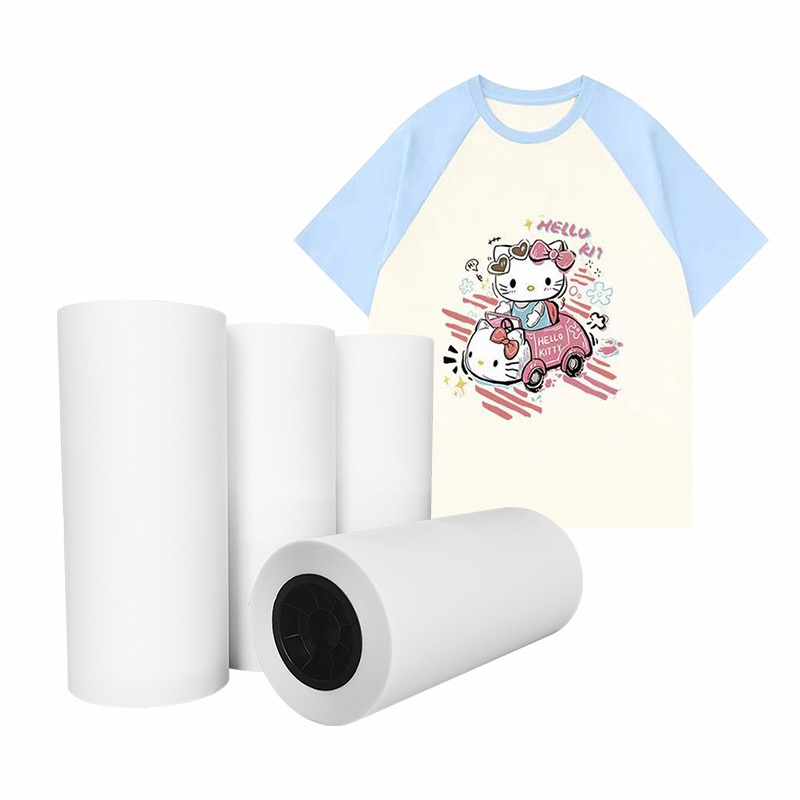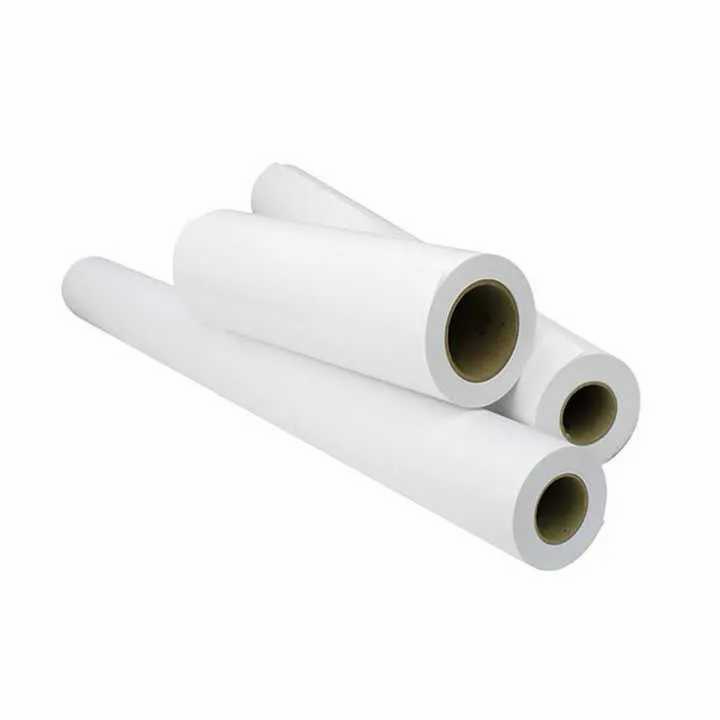
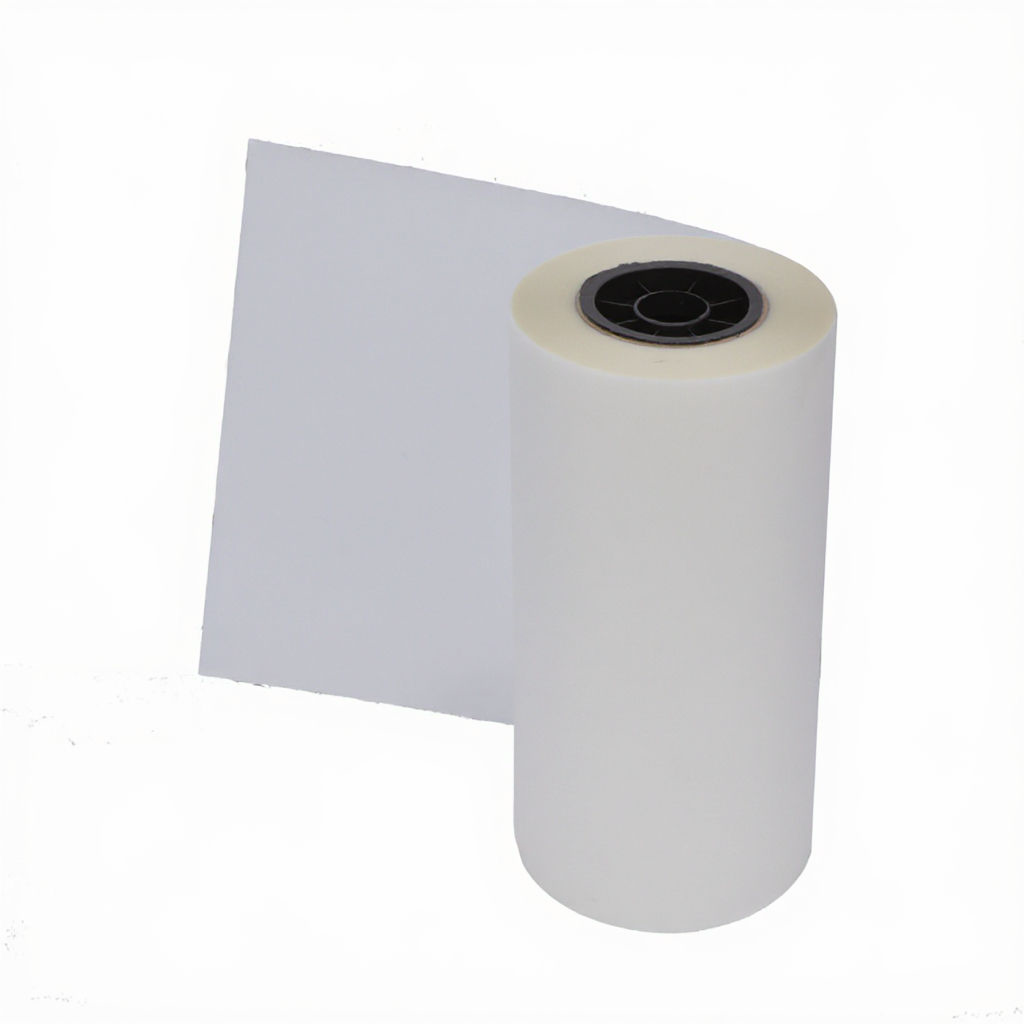
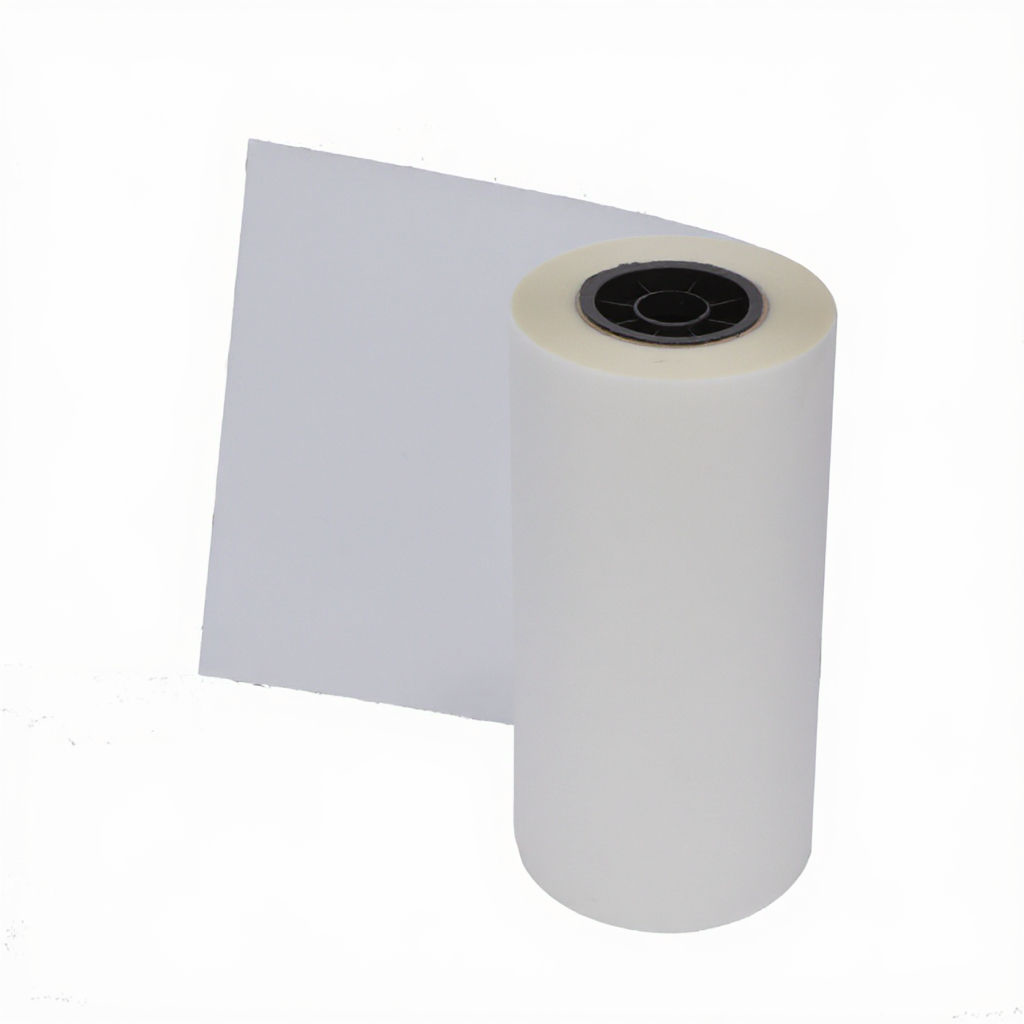
DTF PET film for stable feeding, consistent release, and reliable results across production runs.
Suitable for:
Available in:
Sample testing available before bulk orders.
These are typical reference specs for our matte film options.
Finish: Matte
Peel types: Cold / Hot / Any-time
Structure: Single-side / Double-side (anti-slip)
Powder compatibility: Fine powder supported
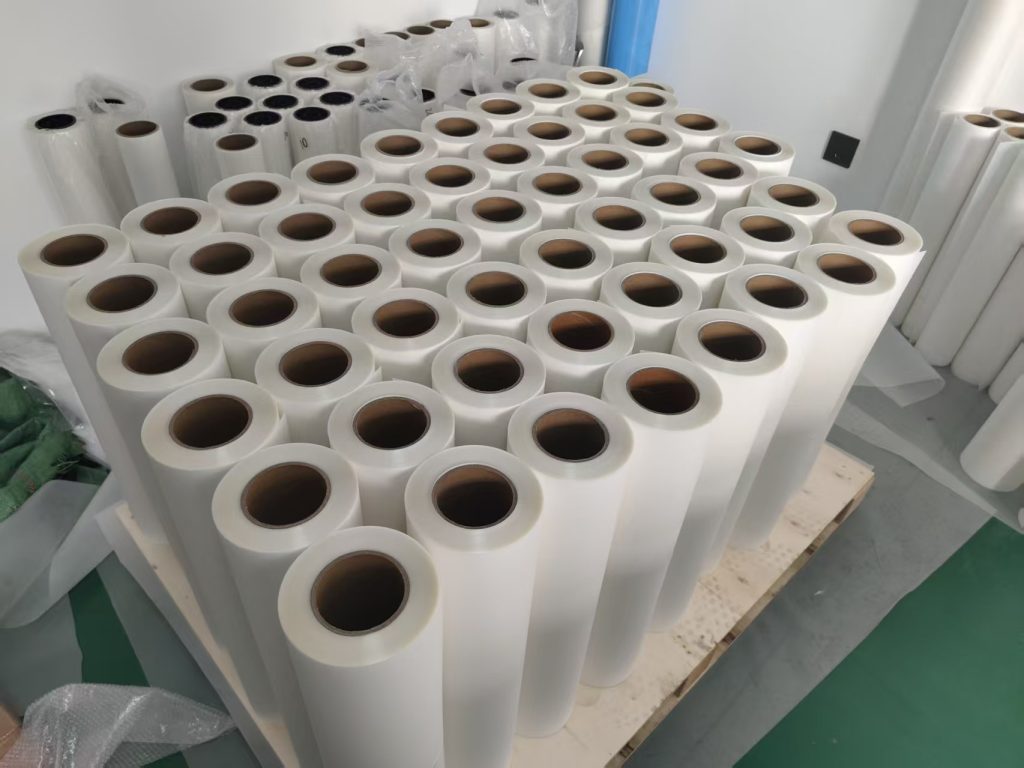
Formats: Rolls and custom sizes
Base film thickness: 75 μm (0.075 mm)
Coating thickness: 9 ± 1 μm
Heat shrinkage (150°C × 30 min): MD ≤ 1.2% / TD ≤ 0.5%
Tensile strength: MD/TD ≥ 148 MPa
DTF film is usually selected based on peel behavior and coating structure.
These two factors affect release consistency, feeding stability, and how the film performs across different production conditions.
Cold peel
Peel after cooling. More stable and controlled, often used for detailed prints.
Any-time peel
Can be peeled hot, warm, or cold. Flexible option for mixed workflows.
Hot peel
Peel while still warm. Faster, but requires more consistent timing.
Single-side film
Only one side is printable (ink-receptive coating). The back side is smooth. Standard choice for daily production.
Double-side film (anti-slip)
Only one side is printable. Back side has anti-slip coating for better feeding stability. Recommended for long runs and high-speed printing.
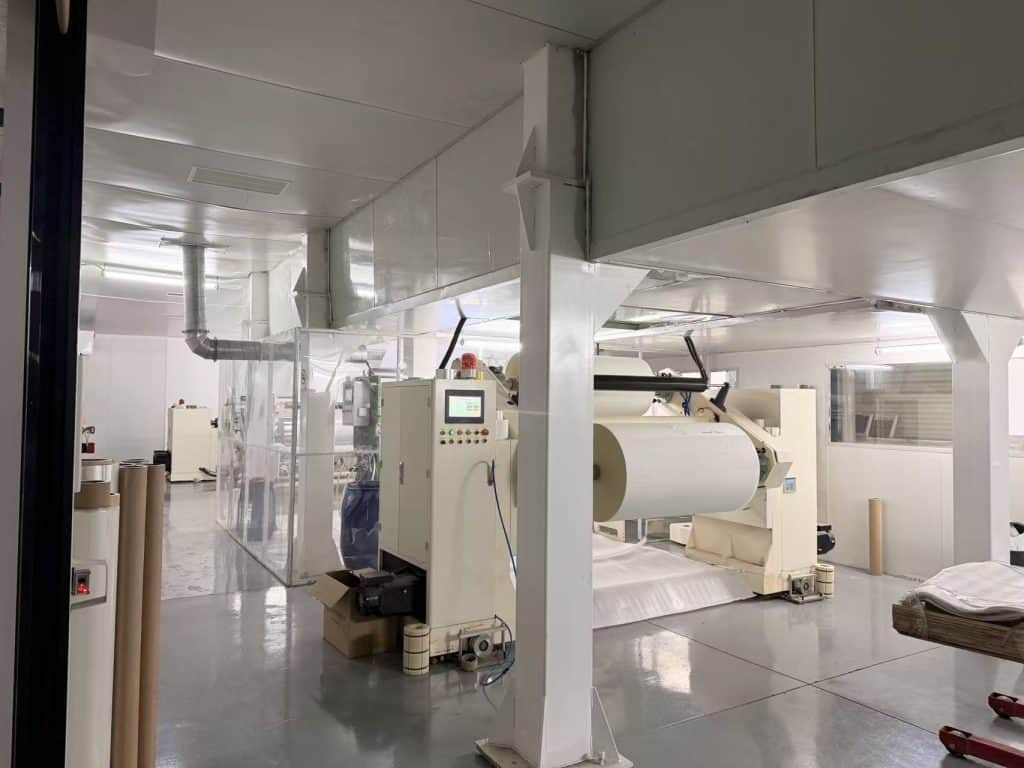
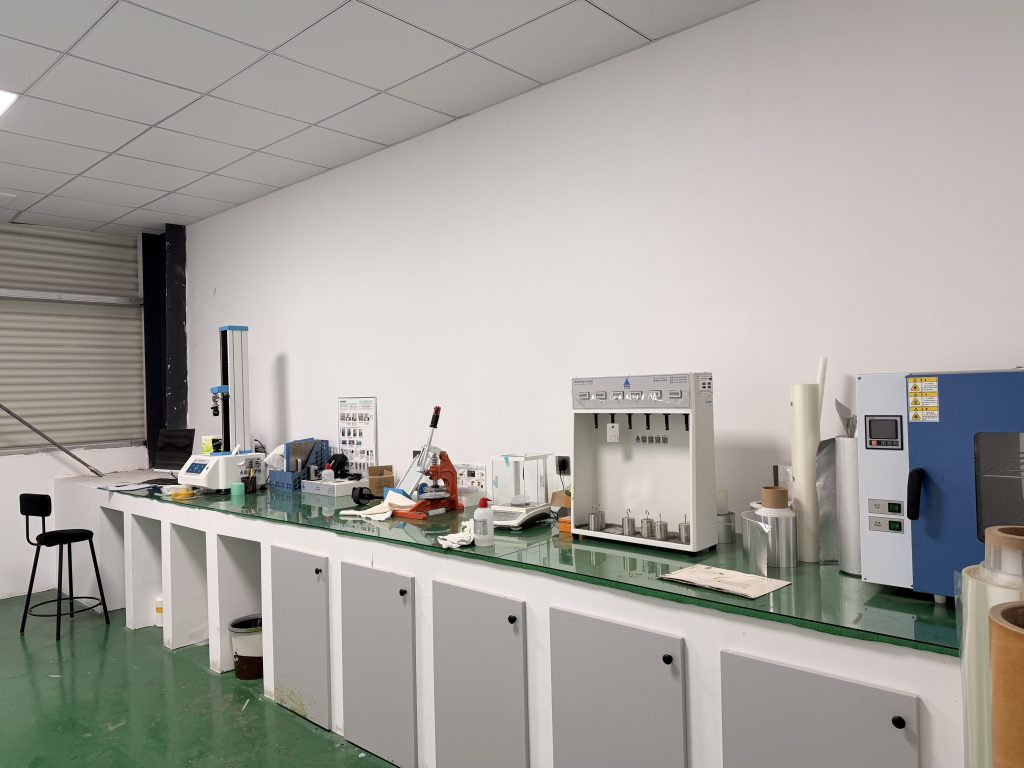
Our films are produced under controlled coating and curing conditions to reduce variation between rolls.
This helps maintain:
• consistent peeling behavior
• stable feeding during long runs
• predictable print results
Suitable for repeat orders and scaled production.
Available in multiple peel types and coating options.
If you have a required specification for your market, send it before ordering so we can confirm the exact product and packing requirements.
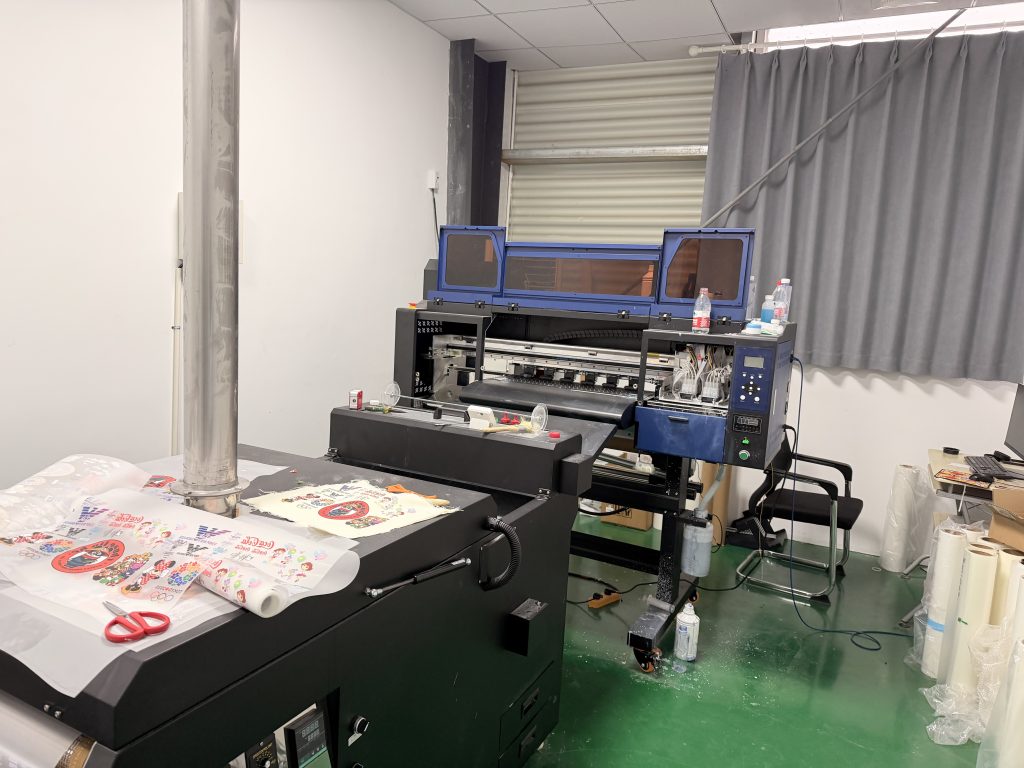
Print the design onto the printable (coated) side of the DTF film.
While the ink is still wet, apply hot-melt powder evenly over the printed area, then shake off excess powder so only the design is coated.
Cure (dry) the powdered film until the powder is fully melted and bonded to the ink layer (using your curing oven/powder shaker dryer).
Place the film on the garment with the design facing the fabric. Heat press to transfer the design.
Peel the film according to the peel type you ordered.
Choose double-side (anti-slip) film. Also check roll condition and storage humidity.
Confirm peel type and timing: hot vs any-time vs cold. Also check fabric thickness and powder selection.
Often linked to humidity, handling, or powder grade. Keep film dry and confirm peel type + timing.
Breathable/soft feel depends on the full setup (ink + powder grade + application amount + curing/press settings). Share fabric type and target feel for a recommendation.
If these issues happen in your production, you can share your setup and we’ll help identify possible causes.
With controlled humidity and proper storage, film can be stored for 6 months or longer.
If film arrives damp after long transport, place it in a controlled room to stabilize before production/testing.
For a more detailed explanation, see our guide on how to store DTF film.
Proper storage helps maintain consistent performance, especially in humid environments.
Hybrid coating helps balance softness and release stability, especially in production where consistency matters.
For a detailed explanation, see our guide on soft hand feel in DTF printing.
Standard thickness is around 75 microns (0.075 mm). This range is commonly used to balance handling strength and stability during curing.
DTF film is typically available in hot peel, cold peel, or any-time peel. Some films are designed to support both immediate and delayed peeling, depending on workflow and operator preference.
Yes, double matte coating is used to improve feeding stability and anti-slip performance during printing. It does not mean both sides are printable.
Press temperature is commonly in the range of 135–150°C, depending on materials, powder type, and production setup.
This is usually related to powder amount, design coverage, or curing conditions. Large solid designs and excess powder will increase thickness.
Yes, stable film surfaces are typically compatible with fine powder (such as 80–200 mesh), which is often used for smoother and softer results.
Production is controlled directly, including coating and quality control processes, to maintain consistency across batches. We are a direct manufacturer.
OEM supply is supported, including custom branding.
Sample rolls are usually tested under the buyer’s own production conditions before placing larger orders. This helps evaluate consistency with specific printers, powders, and fabrics.
SGS certification is commonly used by many customers. Other certifications, such as Oeko-Tex, can be arranged depending on requirements.
Most buyers confirm film performance under their own production conditions before placing larger orders.
Samples can be provided based on your required:
• Size
• Peel type
• Structure
This helps verify compatibility with your equipment and workflow before scaling.
• Standard sizes available (30cm / 37cm / 60cm / custom)
• Peel types: cold / hot / any-time
• Structure: single-side / double-side (anti-slip)
• OEM / private label supported
• Sample rolls available for testing
Lead time and packing depend on order quantity.