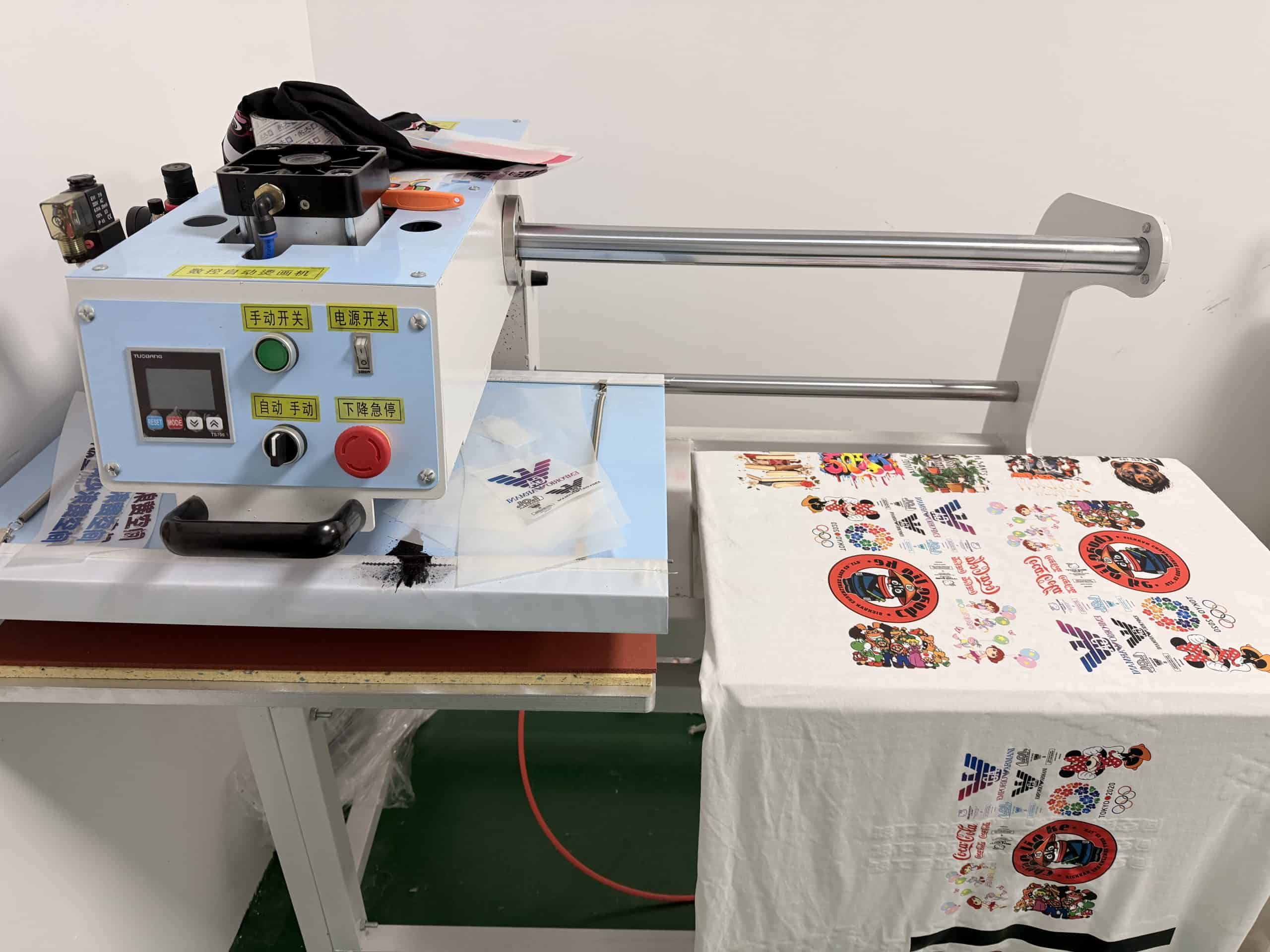
People often talk about matte and glossy like it’s just personal taste. It’s not only that. The finish changes how a transfer looks under light, how the colors “read,” and how the final print feels on the garment.
If you’re choosing between matte and glossy for production, the fastest way to decide is to understand what actually changes—and what doesn’t.
What “matte” and “glossy” mean in DTF
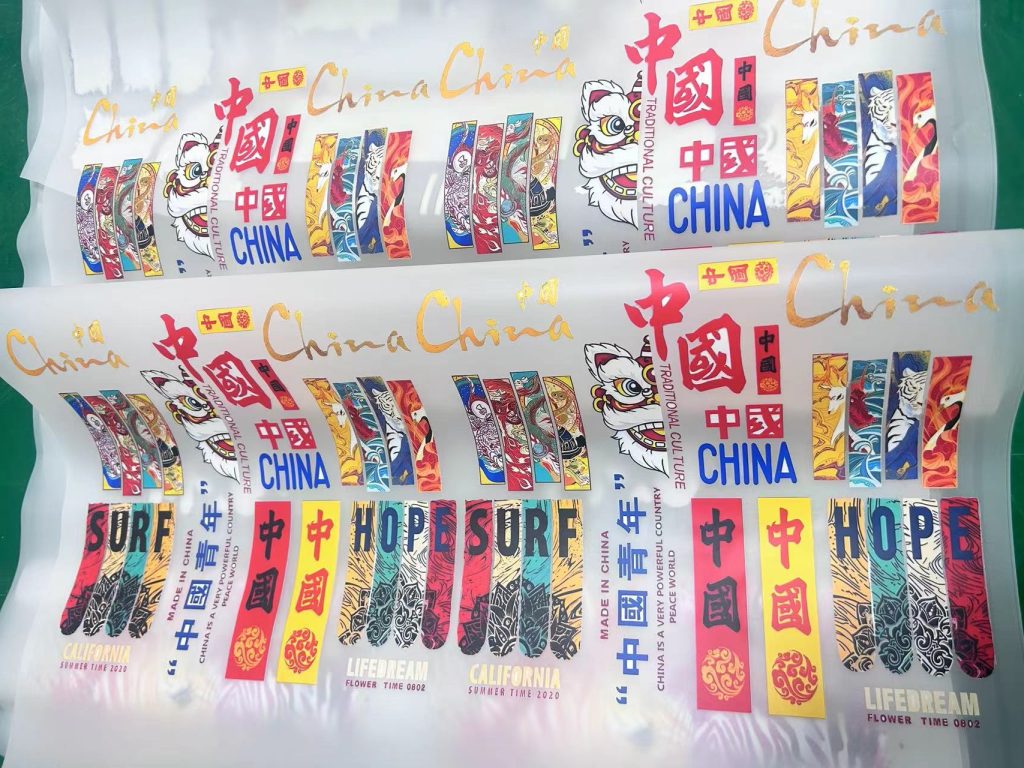
In DTF, the finish you see after transfer is influenced by the film’s surface treatment and the way the transfer layer forms during pressing. That finish can look very different under the same design file.
The important point: the finish is not only about shine. It can affect how “premium” or “commercial” the print looks, especially on dark garments. If you want to see how suppliers usually list these options on rolls, check our DTF film rolls page.
How matte and glossy look in real life
Matte finish
Matte transfers reflect less light. Under indoor lighting they look calmer and more “fabric-like.”
Matte is often preferred for:
- streetwear and fashion styles
- designs that should look soft instead of plastic
- prints that need a clean look on black garments
- minimal logo work and typography
Glossy finish
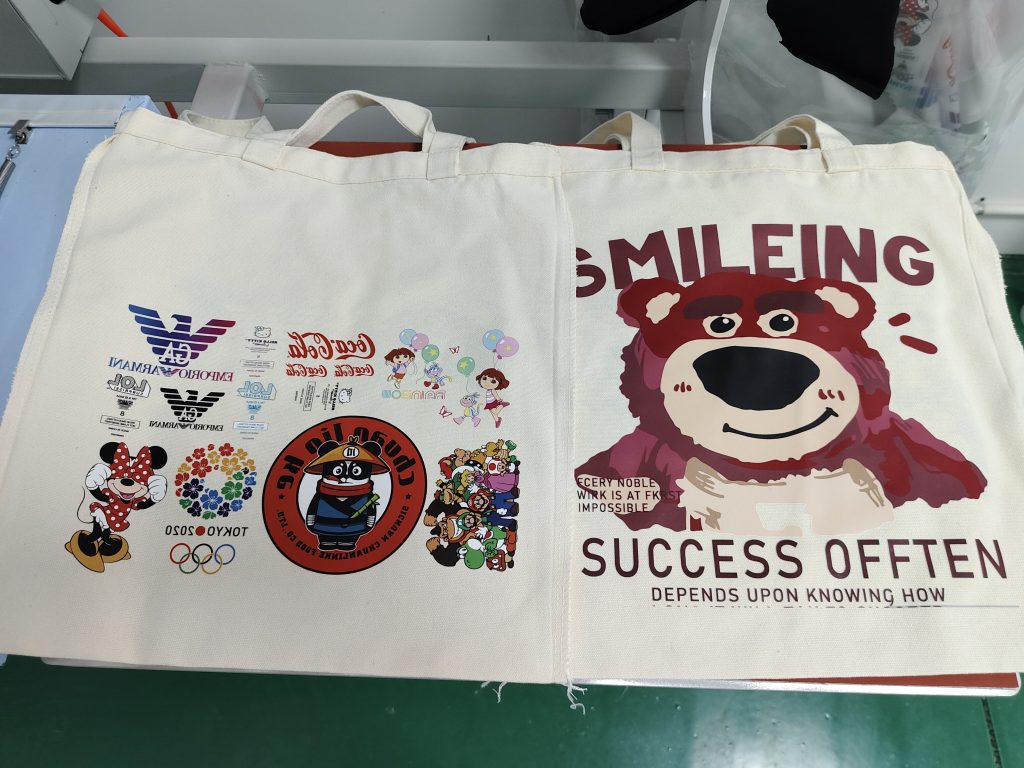
Glossy transfers reflect more light. Under strong lighting they can look brighter and more “poppy,” but the shine is noticeable.
Glossy is often preferred for:
- promotional designs where brightness matters
- sportswear graphics that should stand out
- colorful cartoon/anime styles that benefit from shine
- prints that should look bold from a distance
If your issue is more about feeding stability than appearance, this guide on single-side vs double-side (anti-slip) DTF film explains the difference clearly.
How finish affects color and contrast
This surprises many people: the same artwork can look different simply because of the finish.
Matte can make colors look more “natural”
Matte reduces glare, so you often see a truer-looking color in normal light. It can also make gradients feel smoother to the eye because you’re not seeing reflected highlights.
Glossy can make colors look more “vivid”
Glossy can look brighter under certain lighting. But the reflection also means the print can look different depending on angle. In retail lighting, glossy can look more intense. In photos, it can sometimes create glare.
How finish affects hand feel
Hand feel is never just the film. It’s the combination of:
- design coverage (large solid blocks vs light details)
- powder amount and type
- curing level
- press temperature/time/pressure
But finish can still influence the perception.
Matte often feels less “plastic”
Even if the transfer thickness is similar, matte usually looks and feels more integrated with fabric.
Glossy can feel more “coated”
Especially on large solid areas, glossy often makes the print look more like a layer on top of the garment. Some customers like that look. Some don’t.
Which finish is more forgiving?
There isn’t a universal winner, but in many shops:
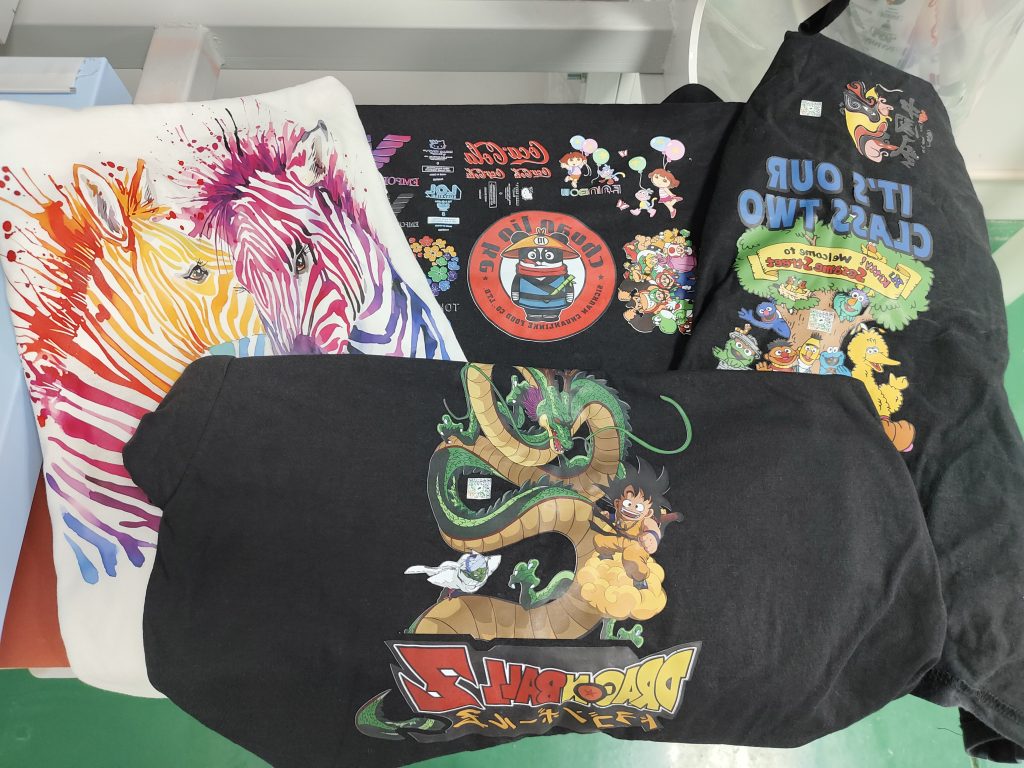
- matte is more forgiving for “everyday” garment printing because it hides shine and minor surface inconsistencies
- glossy can make small surface defects more visible under light
If your customers complain that prints look too shiny, switching to matte is often the simplest fix.
Also, storage matters more than people think—here’s a practical DTF film storage guide (humidity, temperature, shelf life).
A simple way to choose without guessing
If you’re unsure, don’t start with full production. Test with the designs you actually sell.
Test 1: black garment test
Run the same design on a black shirt with matte and glossy. Look at:
- shine under indoor light
- how the edges look
- whether the print looks “premium” or “plastic” to your customer
Test 2: large solid block vs fine detail
Test two designs:
- one with a big solid area
- one with small text and fine edges
Finish preferences often change depending on coverage.
Final thoughts
Matte vs glossy isn’t about which one is “better.” It’s about what look your customers expect and how your designs behave in real lighting.
If your work is fashion-focused or you want a cleaner, softer look, matte is usually the safe default. If you want bold, bright impact and don’t mind shine, glossy can be a good choice.
If you’re comparing options for your workflow, our DTF film FAQ covers common questions like samples, custom sizes, and storage.