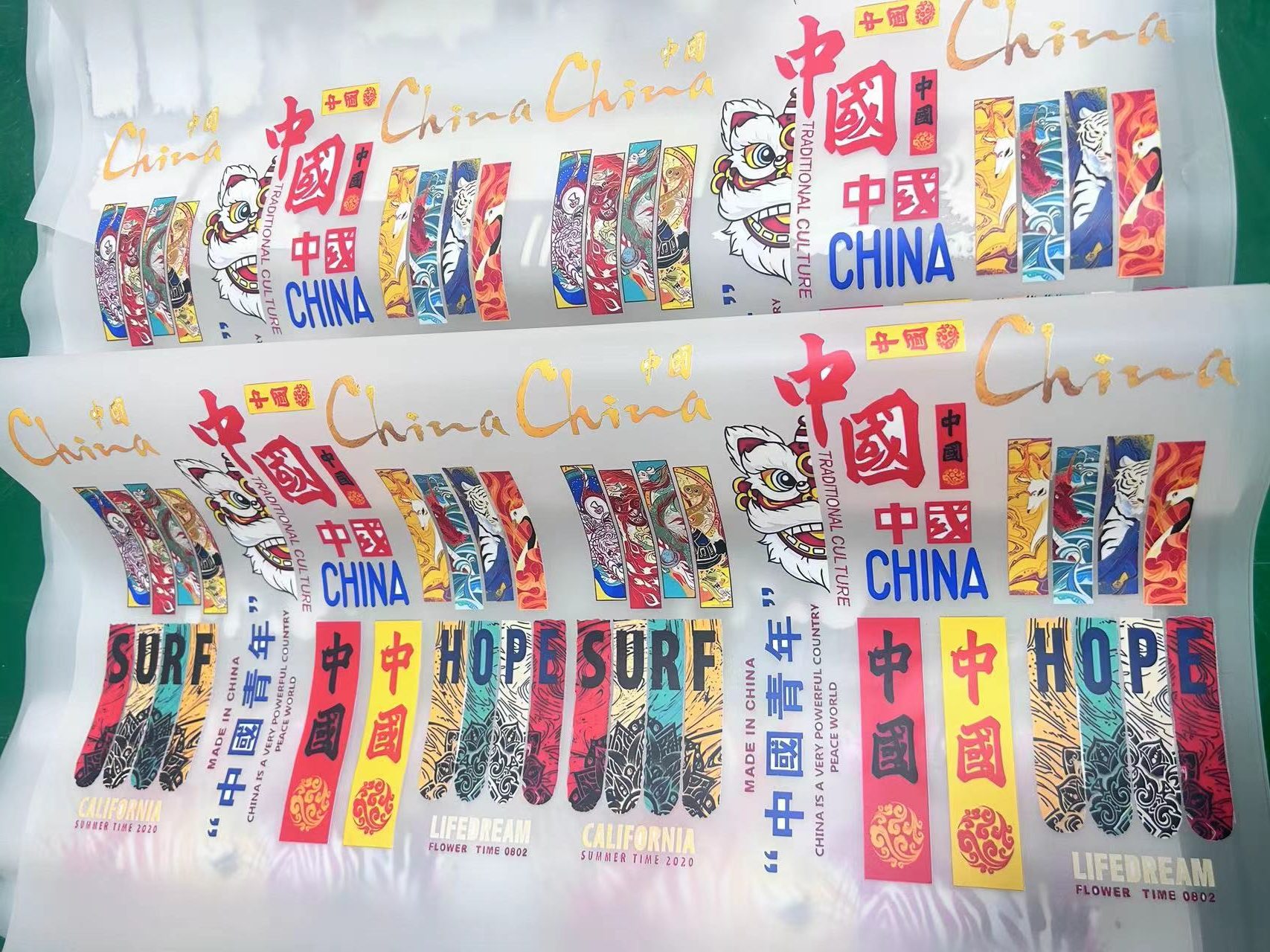
If you’re choosing between DTF, DTG, and sublimation, the internet makes it sound like there’s one “best” method. In reality, each method wins in different situations.
This post breaks down what each printing method does well, where it struggles, and how to decide based on what you actually print—fabric type, order style, and the look your customers expect.
Quick definitions
DTF (Direct to Film)
You print a design onto a special film, apply hot-melt powder, cure it, then heat press it onto fabric.
DTG (Direct to Garment)
You print ink directly onto the garment (like an inkjet printer for clothing). Most setups pre-treat garments first, then print, then cure.
Sublimation
You print designs on sublimation paper using sublimation ink, then use heat to turn the ink into gas so it dyes the fabric. This works best on polyester and is commonly used for sportswear and promotional items.
DTF is best for: flexibility and repeatable production
DTF is popular because it handles many fabrics and can be efficient once a workflow is stable.
Best use cases
- Mixed fabric orders (cotton, poly blends, many garment types)
- Logos and graphics for print shops that do many small-to-medium orders
- When you want to print transfers first and press later
- When you want a process that scales across different garments
Where DTF shines
- Works on many fabric types (not only polyester)
- Good color coverage on light and dark garments
- Transfers can be stored and pressed later (depends on workflow and storage)
Trade-offs
- You need film + powder + curing/press control
- Hand feel depends on design coverage and powder/press settings
- More steps than DTG for “one shirt right now”
DTG is best for: soft feel and photographic detail on cotton
DTG is often chosen for high-detail prints and a soft result, especially on cotton.
Best use cases
- Cotton garments, especially when customers want a soft print
- High-detail artwork and photo-like images
- On-demand printing (print one piece quickly)
Where DTG shines
- Very good detail and gradients
- Soft feel on cotton when done correctly
- No film/powder handling
Trade-offs
- Fabric limitations are real (cotton is easiest; poly can be tricky)
- Pretreatment and curing are critical (and messy for some shops)
- White ink management can be demanding (maintenance matters)
- Not ideal for some specialty fabrics or mixed orders
Sublimation is best for: polyester and “no-feel” prints
Sublimation doesn’t sit on top of fabric. It dyes the fibers. That’s why it can feel like “there’s no print at all.”
Best use cases
- 100% polyester (or high-poly blends)
- Sportswear, team jerseys, and performance apparel
- All-over prints, especially on cut-and-sew items
- Promotional products (mugs, some coated items)
Where sublimation shines
- Extremely breathable “no layer” feel
- Great for bright colors on light polyester
- Very durable because the ink becomes part of the fabric
Trade-offs
- Not for cotton (results are poor unless using special coated products)
- Works best on light garments (dark colors don’t show well)
- Dye migration and heat sensitivity can be an issue on some fabrics
Fabric compatibility
If you print mostly cotton
- DTG is often the first choice for soft, direct prints
- DTF is the flexible option if you also need poly blends and variety
If you print mostly polyester
- Sublimation is the cleanest “no-feel” option (on light poly)
- DTF works on poly too, especially for logos and mixed orders
If you print mixed fabrics every day
- DTF is usually the most practical “one method for many garments” approach
Print feel: what customers notice
DTG feel
Often the softest on cotton when pretreatment and curing are correct.
Sublimation feel
Usually the most breathable because there is no transfer layer.
DTF feel
Depends heavily on the design coverage. Small logos can feel light and flexible. Large solid areas will feel more like a transfer layer.
Durability and wash resistance
- Sublimation is very durable on polyester because it dyes the fibers.
- DTF can be durable when curing and pressing are correct and the film/powder pairing is stable.
- DTG durability depends on pretreatment quality and curing; it can be excellent, but it’s more sensitive to process mistakes.
Cost and workflow differences
DTF
More steps, but efficient once standardized. Good for batch production and repeat orders.
DTG
Simpler for “one garment now,” but requires machine upkeep and pretreatment discipline.
Sublimation
Very efficient on the right materials. But it’s not universal—polyester and light colors are key.
How to choose quickly (3 questions)
1) What fabric do you print most?
Cotton → DTG or DTF
Polyester → Sublimation or DTF
Mixed fabrics → DTF
2) What does your customer care about most?
Soft feel on cotton → DTG
No-feel on polyester → Sublimation
One solution for many garments → DTF
3) Are your orders mostly one-off or repeat batches?
One-off customization → DTG often fits
Repeat batches / transfers → DTF fits well
High-volume polyester production → Sublimation fits
Final thoughts
DTF, DTG, and sublimation all have a place. The best method is the one that matches your fabric mix and the results your customers expect.
If you print many different garments for many customers, DTF is often the most practical “all-around” method. If you focus on cotton and want a soft feel with photo detail, DTG can be ideal. If you focus on polyester sportswear and want the lightest feel possible, sublimation is hard to beat.Your Attractive Heading