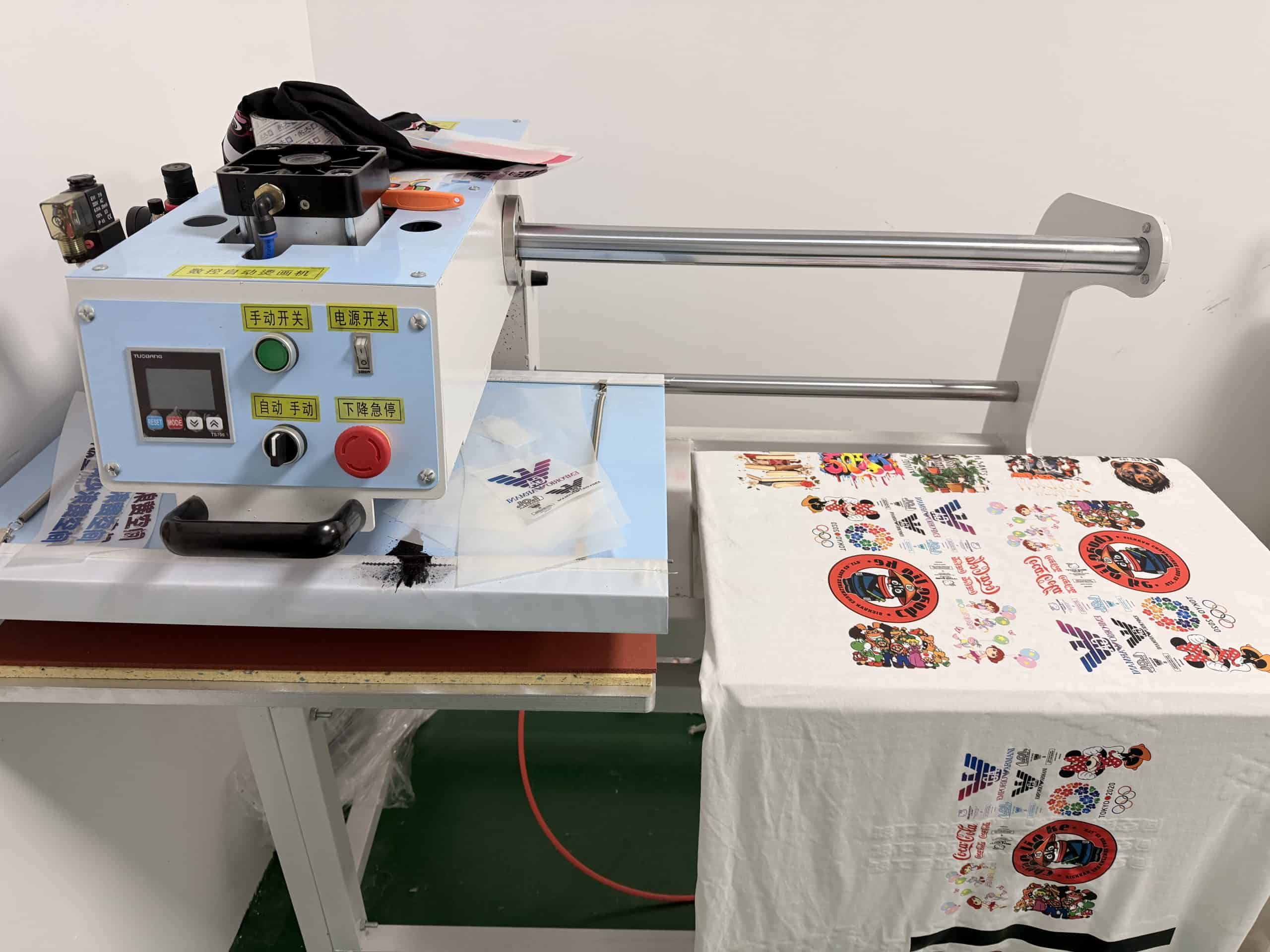
Choosing the right DTF film is not only about print quality. Peel type also affects production speed, workflow consistency, and how easy transfers are to handle during daily operations.
In DTF printing, the three most common peel types are hot peel, cold peel, and any-time peel. Each one has its own advantages, and the best option depends on your shop environment, fabric types, operator habits, and production goals.
In this guide, we explain the difference between any-time peel, hot peel, and cold peel DTF film, along with the practical factors that affect peeling performance.
What Does Peel Type Mean in DTF Printing?
After a DTF transfer is heat pressed onto the garment, the PET film must be removed. Peel type refers to when that film should be peeled.
- Hot peel: remove the film while the transfer is still warm
- Cold peel: wait until the transfer cools completely before peeling
- Any-time peel: peel within a wider timing window, either warm or cool depending on the application
While these definitions are simple, real production conditions can make peel timing more complicated. Fabric thickness, retained heat, adhesive curing, and humidity can all affect how cleanly the film releases.
Hot Peel DTF Film: Best for Faster Production
Hot peel DTF film is often chosen by shops that want to move quickly through production. Because the film can be removed while still warm, there is no need to wait for a full cooling step.
Benefits of hot peel film
- Faster workflow
- Higher output potential
- Less waiting between pressing and peeling
Challenges of hot peel film
Hot peel requires more precise timing. Lightweight garments cool faster, while thick garments such as hoodies or heavy cotton blends hold heat longer. If peel timing is not adjusted, results may become inconsistent.
Hot peel film generally works best when:
- garments are relatively consistent
- heat press settings are stable
- operators are experienced
- workflow is repeatable
For shops focused on speed, hot peel can be a strong option, but it is usually less forgiving when conditions vary.
Cold Peel DTF Film: Best for More Controlled Results
Cold peel DTF film is slower, but many shops prefer it because the process is easier to standardize. The transfer is pressed first, then allowed to cool completely before the PET film is removed.
Benefits of cold peel film
- Clear, easy-to-follow workflow
- Less timing guesswork
- Easier training for new operators
Challenges of cold peel film
Cold peel performance depends on proper cooling. If transfers are stacked too early, or if the room remains warm, heat may stay trapped in the garment. In those cases, peeling too soon can still cause inconsistent release.
Cold peel film is often a good choice for shops that value control, repeatability, and straightforward operator training over maximum speed.
Any-Time Peel DTF Film: Best for Flexible Workflows
Any-time peel DTF film is designed for a wider peel window. Depending on the product and workflow, operators may peel after a short wait while the transfer is still warm, or peel later once it has cooled.
This added flexibility makes any-time peel attractive for shops handling a mix of jobs and varying production conditions.
Benefits of any-time peel film
- More forgiving peel window
- Better suited to mixed garment runs
- Helpful when multiple operators share production
Important note
Any-time peel does not solve deeper production issues. Problems such as under-curing, unstable press temperature, poor storage, or high humidity can still affect results. The main advantage is flexibility, not immunity from process errors.
| Type | When to Peel | Main Advantage | Main Drawback | Best For |
|---|---|---|---|---|
| Hot Peel | While warm | Faster workflow | Less forgiving timing | Stable, high-speed production |
| Cold Peel | After full cooling | More controlled | Slower process | Shops focused on consistency |
| Any-Time Peel | Warm or cool | Flexible timing | Still depends on good process control | Mixed jobs and variable workflows |
What Affects DTF Film Peeling Performance?
Peel type matters, but it is only one part of overall transfer performance. These are some of the most common factors that affect peeling consistency.
1. Fabric thickness and heat retention
Thicker garments retain heat for longer periods, which changes how quickly the adhesive layer stabilizes after pressing.
2. Heat press pressure and temperature
Small differences in pressure or temperature can affect both transfer bonding and film release.
3. Powder type and curing quality
Proper powder curing is essential. Under-cured adhesive can lead to weak bonding and poor release, while excessive heat may also cause problems.
4. Humidity and storage conditions
DTF film and powder are sensitive to moisture. High humidity can make peeling less predictable and reduce consistency from batch to batch.
How to Choose Between Hot Peel, Cold Peel, and Any-Time Peel DTF Film
The best DTF film peel type depends on your production priorities.
Choose hot peel if:
- speed is your top priority
- you run a stable workflow
- garments and settings stay consistent
Choose cold peel if:
- you prefer a strict routine
- you want easier operator training
- you value control over speed
Choose any-time peel if:
- you run mixed jobs
- you have multiple operators
- you want more flexibility in peel timing
There is no universal best option. The right choice depends on your actual shop conditions.
Single-Side vs. Double-Side DTF Film: What Is the Difference?
This point is often confused with peel type, but they are not the same.
- Peel type refers to when the PET film is removed
- Film structure refers to how the film behaves during printing and feeding
Single-side DTF film
Single-side film is commonly used in many standard workflows.
Double-side DTF film
Double-side or anti-slip DTF film is often selected when better feeding stability is needed. It can help reduce slipping, improve alignment, and support smoother transport during long runs.
Double-side film does not change the basic peel timing. Its main benefit is handling stability during printing.
DTF Film Storage Tips for Better Peeling Consistency
Proper storage can prevent many common DTF transfer problems.
Best practices include:
- storing film in a cool, dry place
- avoiding direct sunlight and heat sources
- keeping rolls sealed or protected when possible
- maintaining humidity at a stable level, often around 40% to 60%
If the production environment is too humid, film performance can become less consistent, and press setting adjustments alone may not solve the issue.
Simple Test Method to Find the Best Peel Type
If you are unsure which peel type works best in your shop, run a controlled test.
Use:
- one design
- one fabric
- one set of press settings
Then vary only the peel timing.
- Press the transfer normally
- Peel one sample while still warm
- Peel another after full cooling
- Compare ease of release and edge cleanliness
This simple test can quickly show which peel method performs best with your equipment and workflow.
Final Thoughts
When comparing any-time peel vs. hot peel vs. cold peel DTF film, the best choice is not about theory alone. It is about what works most reliably in your own production environment.
Hot peel supports speed.
Cold peel supports control.
Any-time peel supports flexibility.
If you match the peel type to your workflow, garments, and shop conditions, you are much more likely to get stable and repeatable transfer results.